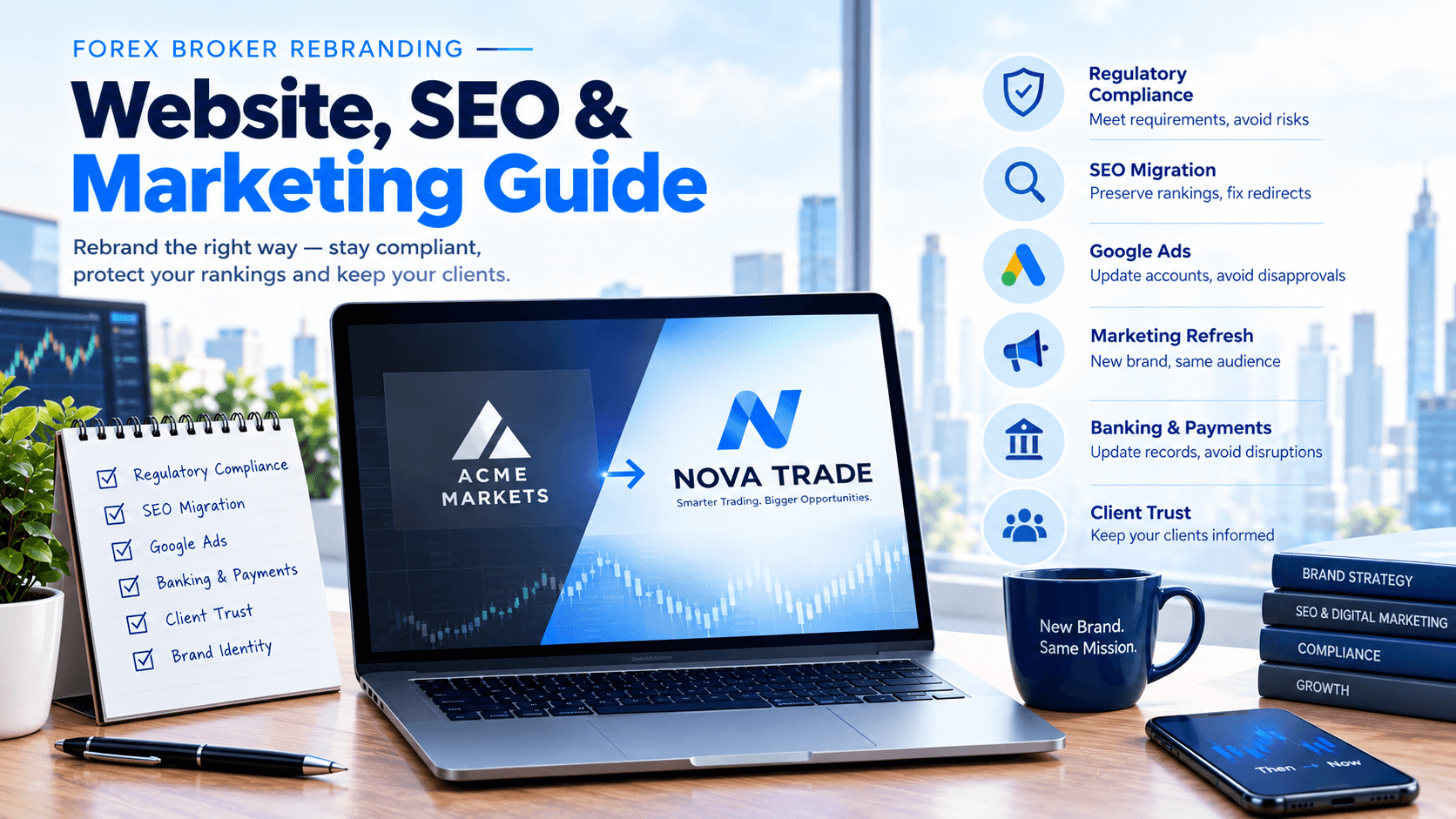
A rebrand looks like a design project. For a regulated or licensed broker, it's closer to a compliance project that happens to include design.
A new logo is easy. A new name touches your license records, bank and payment accounts, ad certifications, client agreements, platform branding, and years of search rankings. Founders who treat it as a visual refresh tend to find out about the rest one frozen account or lost ranking at a time.
This guide covers what to decide first, what to check before anything goes public, and how to refresh your website and marketing without losing the trust and traffic you've built. It's general information, not legal advice. Confirm regulatory steps with your regulator or counsel, because requirements differ by jurisdiction.
Decide What's Actually Changing
"Rebrand" can mean four different things, and each triggers different work.
What changes | Examples | What it triggers |
Visual identity only | Logo, colors, typography, website design | Website, platform, and marketing updates. Usually no regulatory filing. |
Trading name / brand name | "Acme Markets" becomes "Nova Trade" | Regulatory disclosures, legal documents, ads, banks, and platforms |
Legal entity name | The registered company changes its name | Regulator notification or approval, license records, contracts, banks, and auditors |
Domain / website address | acmemarkets.com becomes novatrade.com | SEO migration, email authentication, ad destination updates |
Many rebrands change several at once. Work out which ones apply before you plan anything else, because the legal-name change is the one with the longest lead time.
Step 1: Check the Regulatory Position First
Regulators care about names because names can mislead clients. Some are strict about it. For example, CySEC has been reported to require formal approval for name changes, and has said that a regulated entity's name should reflect its activities.
Before you announce anything:
- Ask your regulator what is required: for a trading-name change and for a legal-name change. Some require notification, others approval, and timelines vary.
- Check that your name doesn't mislead: Words like "bank," "capital," or "regulated" in a name can draw questions if they don't match your license.
- Update the license records and public register entries: so the new name and the old name can be connected by clients and counterparties.
- Keep promotion rules unchanged: A new brand doesn't change risk-warning, bonus, or claims rules in your markets.
See our compliance checklist.
Renewal and reporting also depend on the right entity details.
See what founders forget about renewal.
Step 2: Protect the New Brand Before You Launch It
Run trademark searches in the markets you serve before you commit. A name clash discovered after printing and domain changes is expensive.
Secure your domains and handles: the main domain, common variations, and social accounts.
Plan for clone firms: Regulators such as the FCA regularly warn about clone firms that copy the names and details of genuine, authorized brokers. A rebrand creates a window where clients are unsure which name is real, which is when impersonators move. Counter it by:
- Publishing a clear announcement on your own site and verified channels
- Keeping the old domain and redirecting it, so clients aren't stranded
- Monitoring for look-alike domains and reporting them
Step 3: Migrate the Website Without Losing Rankings
Your website's search rankings are an asset. A careless domain or URL change can erase them.
If the domain changes:
- Map every old URL to its new equivalent
- Set permanent (301) redirects from old URLs to new URLs, page by page, not all to the homepage
- Keep the redirects in place for at least 180 days, and ideally a year or longer, in line with Google's site-move guidance
- Use the Change of Address tool in Google Search Console
- Update internal links, canonical tags, and your sitemap
- Re-check structured data, including your organization name and logo
If only the brand changes on the same domain: update page titles, headings, schema, and copy, and keep URLs stable wherever possible.
Update every claim. Regulation statements, license numbers, entity names, and legal pages must match your records exactly.
See our website design guide.
Step 4: Refresh Your Marketing Without Breaking Your Ads
Google Ads: the advertiser name, billing details, landing page, and license records need to match. A mismatch is a common cause of disapprovals and suspensions, and you may need to update or resubmit certification details.
See our Google Ads compliance guide.
Content: audit your existing articles and update old brand mentions, author bios, and license details. Keep strong pages and redirect weak ones.
See our content marketing guide.
IBs and affiliates: your partners' creatives still use the old name and may carry claims you wouldn't approve. Issue new approved materials, set a date when old ones must stop, and update tracking links. The broker is responsible for how partners promote it.
See our IB scaling guide.
Messaging: use the rebrand to sharpen what you say, but keep it specific and honest. Avoid claims about returns, and avoid presenting a new name as a new regulatory status.
Step 5: Update the Platform, CRM, and Client Touchpoints
Clients meet your brand in more places than your website:
- MT5 and trader's room: server names, terminal branding, and portal design
- Emails and statements: sender names, templates, trade confirmations, and statements showing the correct entity
- Legal documents: client agreement, terms, risk disclosure, privacy policy, and complaints procedure
- Mobile apps: store listings, names, icons, and screenshots, which go through store review
- Support channels: chat widgets, scripts, and help articles
Email deliverability: if the sending domain changes, set up authentication (SPF, DKIM, and DMARC) before you send. Major mailbox providers expect it from bulk senders, and unauthenticated client emails may land in spam.
Step 6: Tell Banks, Payment Providers, and Partners
Banks, payment processors, liquidity providers, platform vendors, auditors, and insurers hold records tied to your name and entity. If those records don't match what clients and regulators see, you can face verification holds or delays.
Notify them before launch, send updated documents, and confirm each has updated its records. See our guides to forex brokerage banking and payment gateways.
Step 7: Communicate With Clients Honestly
Clients worry when the name on their account changes. Tell them early, clearly, and accurately:
- What is changing, and the date it takes effect
- What is not changing, only if it's true. Don't promise that terms, entities, or protections are unchanged unless they are.
- How to verify the new name, such as a link to the regulator's register
- Where to get help
Send it through your own verified channels, and give support teams a script and FAQ in advance.
A Phased Timeline
Phase | Typical timing | Key actions |
Decide and clear | 90–60 days before | Define what changes, check regulatory steps, run trademark and domain checks |
Prepare | 60–30 days before | File regulatory notices, build the new site, prepare redirects, and draft documents |
Notify | 30–7 days before | Notify banks, processors, vendors, and partners. Brief support teams. |
Launch | Day 0 | Switch the site, redirects, platform branding, and emails. Announce to clients. |
Monitor | 0–90 days after | Watch rankings, ad status, deliverability, deposits, and support tickets |
Timelines depend heavily on your regulator. Treat these as planning ranges.
What to Measure After Launch
- Organic traffic and rankings for key terms, and indexing of the new URLs
- Brand search for the new name
- Registration, KYC completion, and first-deposit rates
- Ad approval status and any disapprovals
- Email delivery and spam placement
- Support tickets mentioning the name change
- Payment provider holds or verification requests
Common Mistakes
- Treating a legal-name change as a design task
- Redirecting every old URL to the homepage
- Letting partners keep using old materials
- Forgetting to update banks and processors
- Changing the ad account's entity details out of step with the site
- Announcing a new name without telling clients how to verify it
What's New in 2026
- Clone-firm warnings continue: so brand changes need a clear verification path for clients.
- Promotion scrutiny is high: The FCA reported blocking over a thousand websites and intervening on many thousands of financial promotions in 2024, so every refreshed page needs a compliance review.
- AI search rewards consistency: Keeping your name, entity details, and license information consistent across your site, schema, and profiles helps search engines and AI tools identify you correctly.
- Email authentication is expected: so plan it before changing sending domains.
- Ad certification details may need re-checking: if your entity or brand details change. Confirm how this works for your account.
Related Reading
- Forex Broker Website Design: Best Practices for Conversions
- Google Ads Compliance for Forex & Trading Businesses
- Content Marketing for Forex Brokerages: What Actually Works
- Forex Broker License Renewal: What Founders Forget
About FX Launch Pad
The first question we ask in any rebrand is whether it's a brand change or an entity change, because the answer decides the timeline. Branding sits alongside licensing, banking, and technology in our setup work, so we plan a rebrand across all of them together. That way, the name on your website matches the name in your license records, bank files, and platform.
If you're planning a rebrand and want to map the regulatory and technical steps before anything goes public, book a free consultation and we'll go through it with you.